

Ashima Raizada, creating art as evidence of life
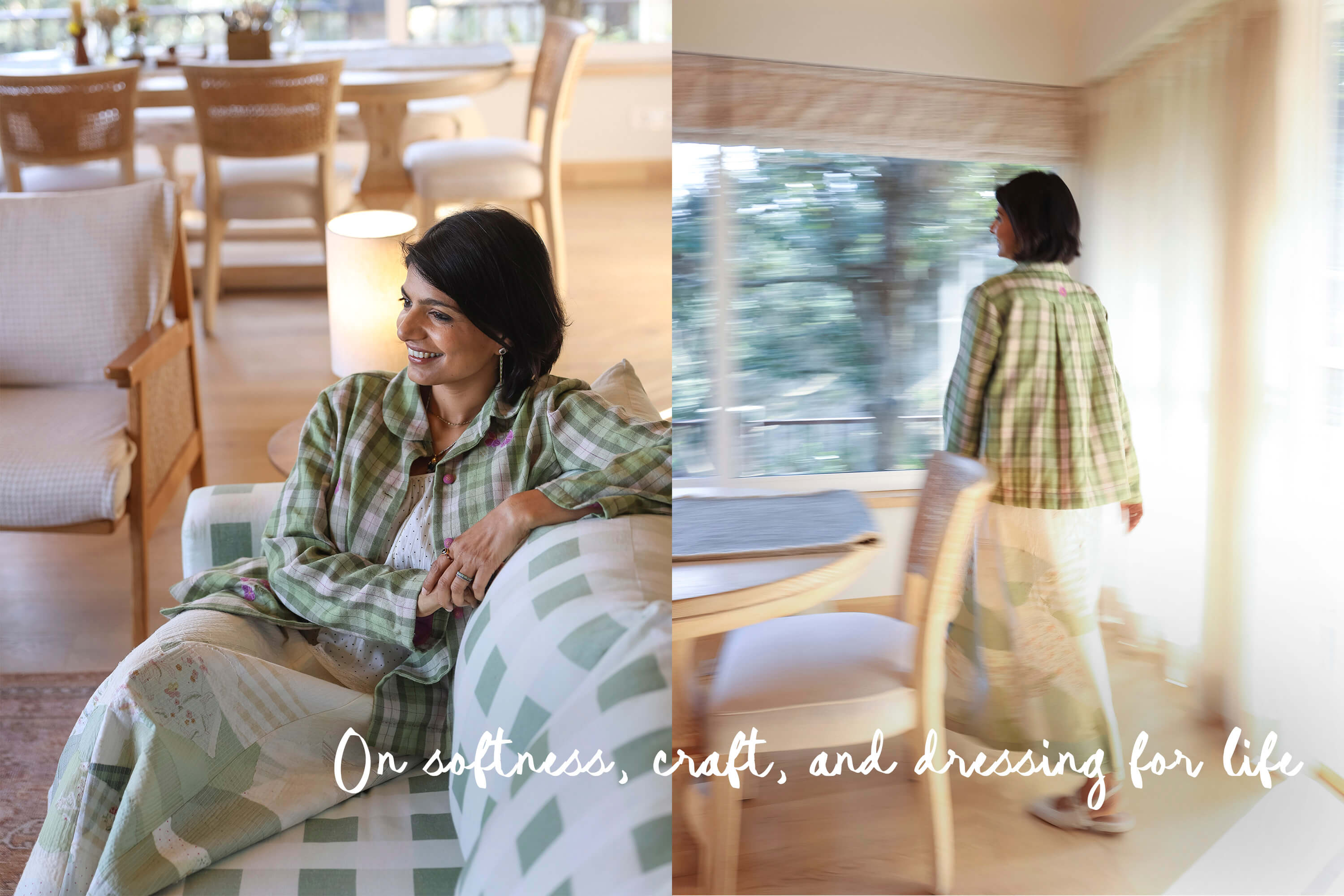
 Ashima wears the Myths and Motifs Dress
She is creating evidence of life by going beyond photography, experimenting with mixed media and compelling you to pause and sit with yourself, before life passes you by.
A painter, photographer and mixed media artist, Ashima Raizada lets us into her world, through her studio, brimming with art, supplies and so many conversations; discussing the role of light in her work, how she looks at photographs like paintings, and revealing the one thing essential to becoming an artist.
Ashima’s work oscillates between the mundane and the abstract and absurd, and her beautiful work has been exhibited all across India, as well as in Dhaka and Barcelona. She was chosen by Hindustan Times as one of the Top 30 under 30 young achievers in 2018.
You say that you like to look at photographs as paintings. How do you manage to achieve that and what exactly do you achieve?
I think traditionally photographs are realistic and beautiful, and require you to look and identify a space or a feeling. But paintings ask you to pause. Modern paintings especially, hold within them an element of stillness, and you are required to stand in front of them, find something within them, and within yourself. I want to make photographs like that, make them as feelings, demanding you to pause.
For example, black and white photographs reduce noise, making you find something more in them than meets the eye at once. Photos with a lot of colours make them dynamic, creating a mirage of feelings and stories. So, when I look at photos as paintings, I get to construct the composition considering a lot of factors like these, and sometimes, I even like to intersperse them with different media to make them come alive by playing with different textures, perspectives, lenses and dimensions.

So, do you believe different mediums hold different emotional truths for you? Like are some feelings only paintable, not photographable?
Oh, absolutely!
I think I journal when I study philosophy, paint my feelings and when things get heavy, I use mixed media. For example, the project I’m currently working on, is trying to explore my younger brother’s experience with autism, along with our family’s life around it. And for that, I’m currently exploring sketching, collaging, taking photos, and it would perhaps be a bit of everything. I’m trying to work on something that is a spectrum, so how can its translation be something limited?
What was the first piece of art that you remember calling ‘work’?
How did you enter the field of art? Take us through your journey.
Since I was a child, I remember coming back from school and going into my own world with drawing. In college, I had taken up engineering, and I would bunk classes to go take photos of the city. So, I was always creating something. But I think one of the first times I felt like this is something I can and will do, that this is going to be work for me instead of a regular job, was when my dad gifted me oil paints and a knife set and I painted architectural forms on canvas. I realised that because of living in Chandigarh, I did have a Corbusier-subconsciousness. And I would find myself wondering that not only was Corbusier able to construct an entire city in his imagination, but that city was now alive, and we’re all getting to live in it! That possibility made me want to create, live and realise it even more.
So, when I graduated from college, I decided to fully commit to the arts as it felt like the right thing to do. I started building my portfolio from scratch and participated in local exhibitions. Getting scholarships and participation opportunities gave me the encouragement to explore and expand my practice to the national and even international level. I feel it’s very important to put your work out there and be very persistent with it.
You play with light a lot in your work. What do you see it as in your work? What is your relationship with it - something that controls your work, or something that you try to control?
I think every photo that I take, in some way, also represents my state of mind during that time. Managing light is more psychological rather than technical for me. The light and darkness that we balance within us is what comes alive in my work as well. What I choose to focus on through the negotiation of colour, space and light, trickles down into how the photo is made. So, taking a photo is like having a dialogue with myself.

If your practice is a conversation with yourself, do you feel like you’re listening, arguing or comforting?
It sits somewhere between listening and arguing. I begin by listening because my practice emerges from observation, noticing what exists beyond the obvious. I try not to impose meaning immediately, I wait for it to surface.
There’s also an argument, a negotiation between what is seen and what is felt, between the image and what it refuses to reveal. The tension is important; it keeps the work alive.
Your project, The Silence of Growing Things, is a tribute to nature in many ways. Would you like to take us through it?
The idea began on a walk.
I go on a lot of walks, as one does in Chandigarh, and take a lot of photos while doing so. But I felt like those photos weren’t doing justice to the practice. I asked myself, how can I go beyond? How do I bring alive the experience of going on a beautiful walk in a beautiful city? Some of the leaves I collected prompted me to start experimenting with their physicality.
The experience of being in a park is very personal and photography can be intrusive sometimes. So, I chose to take far-off silhouettes, print them on A5, and turn them into a collage with fallen leaves, making them hold presence even after they’re dead. It made people look closely and experience nature in a different way.
Fashion can be a means of expression, also, joy, resistance and more. Do you use it as any of those? Or is it functional for you?
I love all of these expressions of fashion, and my only take on fashion is that it shouldn’t feel borrowed. We must arrive at it, by experimenting, trying and evolving constantly. When I was growing up, I was distant from fashion, I tried to hide myself behind clothes, not draw any attention. But slowly, I found my own style, and that too, keeps evolving with time.

How does Buna speak to you?
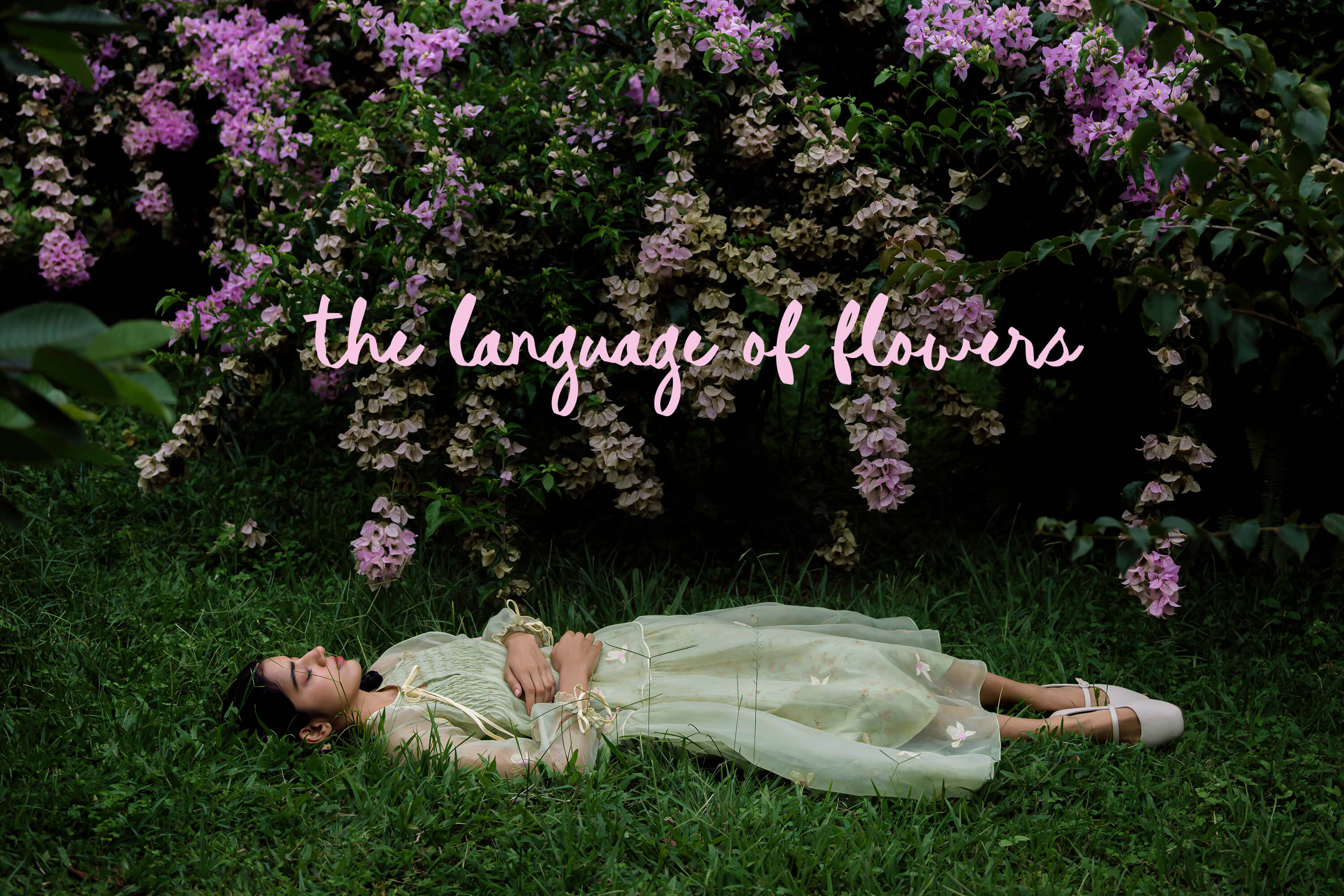
Buna is the perfect pastel palette, with simplicity shining through, and possessing enough space to let the eyes breathe. The soft, cotton material is organic and natural and something I can live in everyday, while the organza dresses are perfect for exhibitions and parties.
Ashima Recommends
Book on Visual Art: Big Magic by Elizabeth Gilbert
She writes about how to think outside the box without being frightened, and does it with a lot of warmth and honesty.
Visual Artist: Bharti Kher
She’s a sculptor and painter, and her metaphorical translations of the cosmos as well as her ideas and experience of being a woman, are things she portrays in an absolutely unique way.
Director: Richard Linklater
I love the way he documents time and allows introspection through his work.
Favourite spot in Chandigarh: Government Museum and Art Gallery, Sector 10
It’s not very well decorated, but is raw and beautiful, with no pretense. It is made in Corbusier’s brutalist design, and offers a certain silence to its visitors.
What is it you’re trying to say the most through your work?
I’m just trying to create evidence of life. Materialising my thoughts, feelings and experiences at every age and turn. Every day is brimming with so much feeling, and I do not want life to pass me by. This process lets me be present with myself and the world around me and document it in both, little and big ways, for future me and for beings who will live on this earth to look back at one day.

Any final words for someone who’s wishing to become an artist?
Have courage. The life of an artist is an extremely difficult, different and uncertain one, and you must develop a mental tenacity to deal with that. But, don’t forget to play!
Credits
Curation and copy: Avleen kaur
Photographs: Puneet Raj Singh

Leave a comment
This site is protected by hCaptcha and the hCaptcha Privacy Policy and Terms of Service apply.